Cart
0
You may also like





Have you ever looked at two photos of yourself taken only weeks apart and wondered why your jawline looked sharper in one than the other? Most people assume the answer is genetics or body fat. But what if the difference had more to do with how you breathe, how you hold your head, or where your tongue rests throughout the day?
The truth is that your jawline doesn’t exist in isolation. It is influenced by a network of habits that affect posture, muscle function, and facial balance. That’s where tongue posture neck alignment comes in. In this guide, you’ll discover how simple, non-surgical adjustments to tongue posture, neck alignment, and daily routines may help support a more defined and balanced facial profile over time.
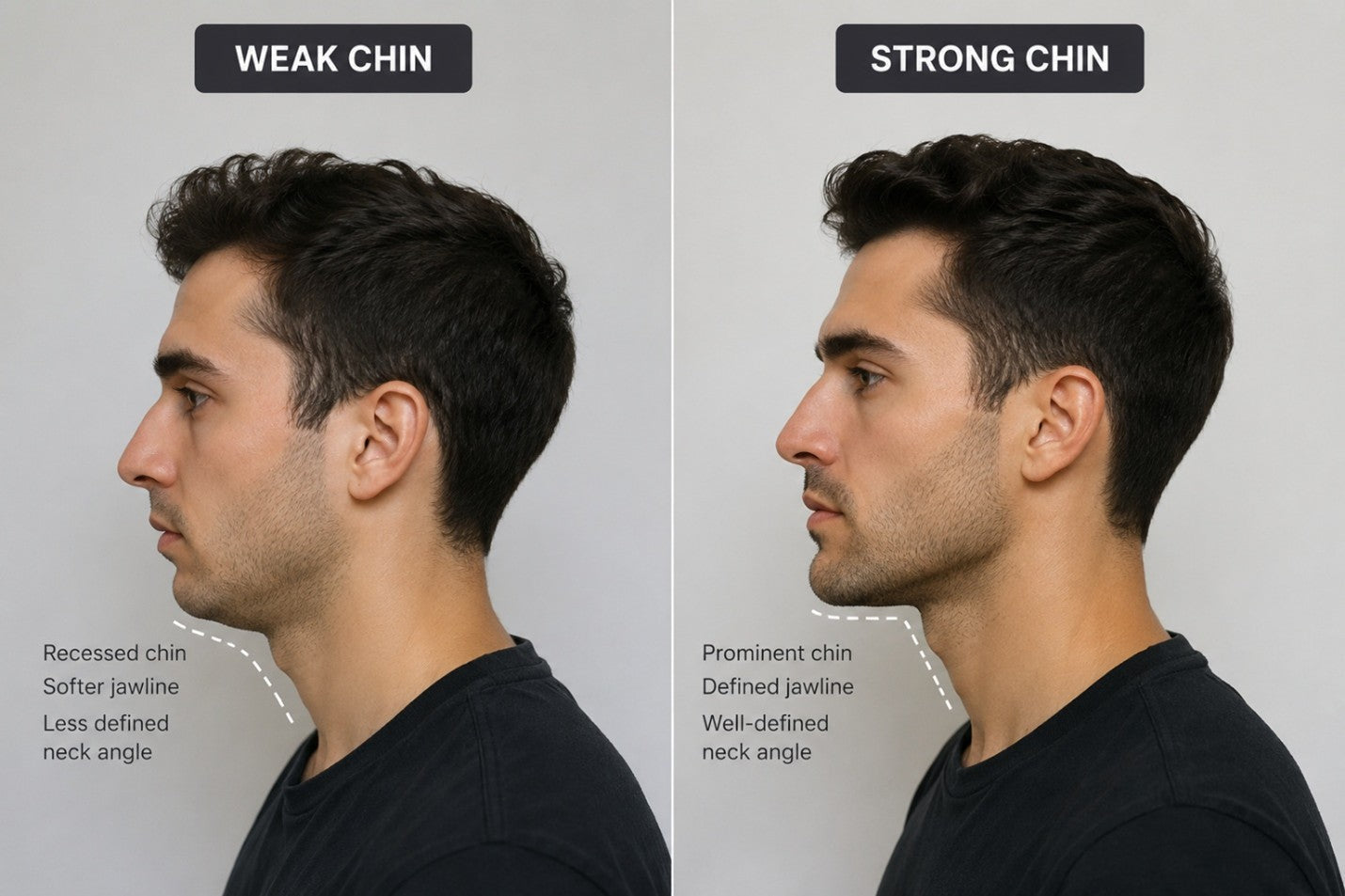
A weak jawline is often described as a lower face that appears soft, less defined, or slightly recessed on the sides. Genetics plays a major role, but they are not the whole story. This matters because the jawline is not only cosmetic. What many people don’t realize is that it is connected to more than appearance.
The lower face is supported by a group of muscles that work every day when you chew, swallow, speak, and breathe. According to the American Speech-Language-Hearing Association, tongue posture is closely linked to breathing, swallowing, and other oral patterns. When these muscles work well together, they can support smoother oral function and better control of the lower face over time.
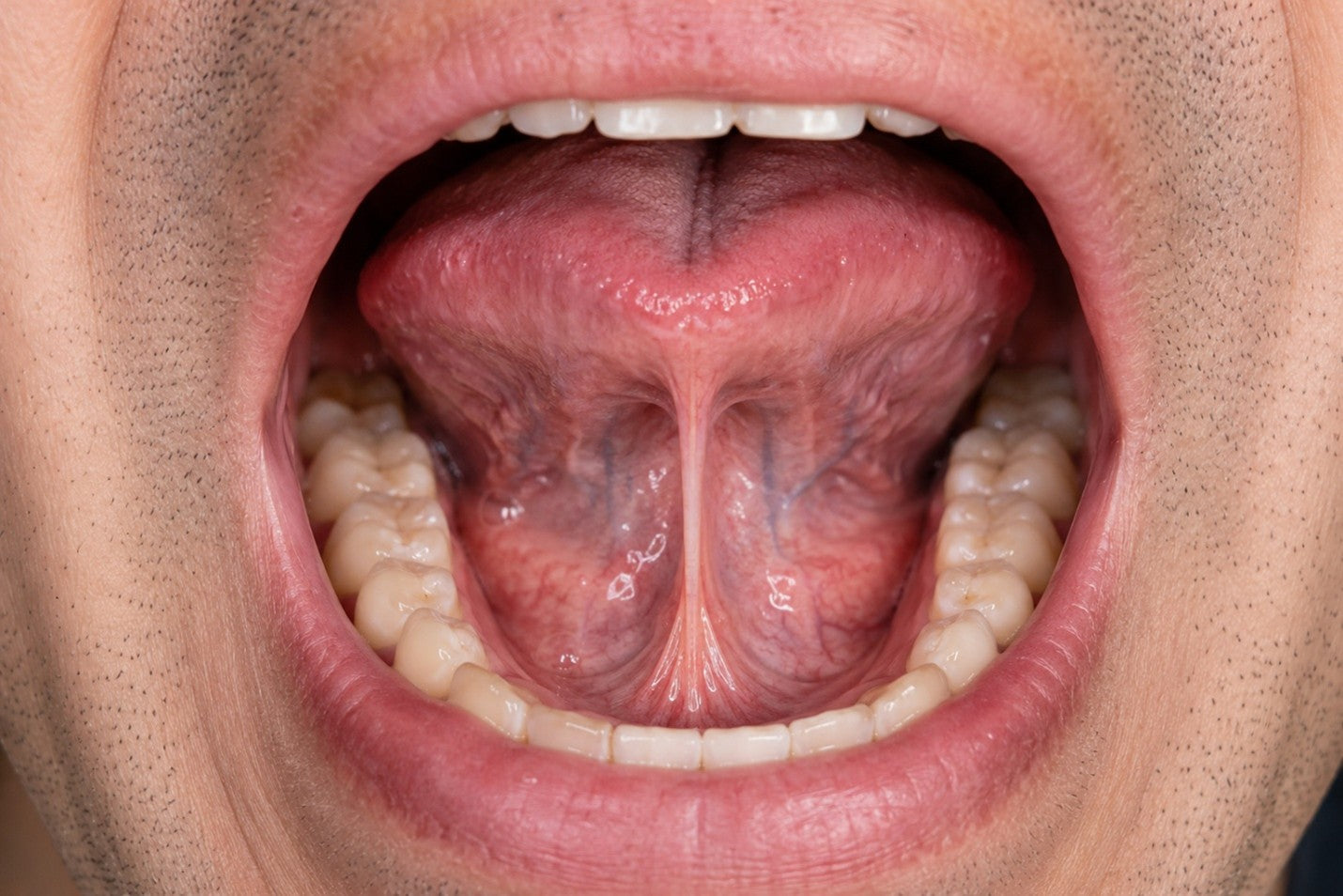
Tongue posture training works best when it is practiced gently and consistently, not forced. A simple way to practice this is the tongue suction hold. Place the tip of your tongue just behind your upper front teeth, then gently lift the rest of the tongue until it rests flat against the roof of your mouth.
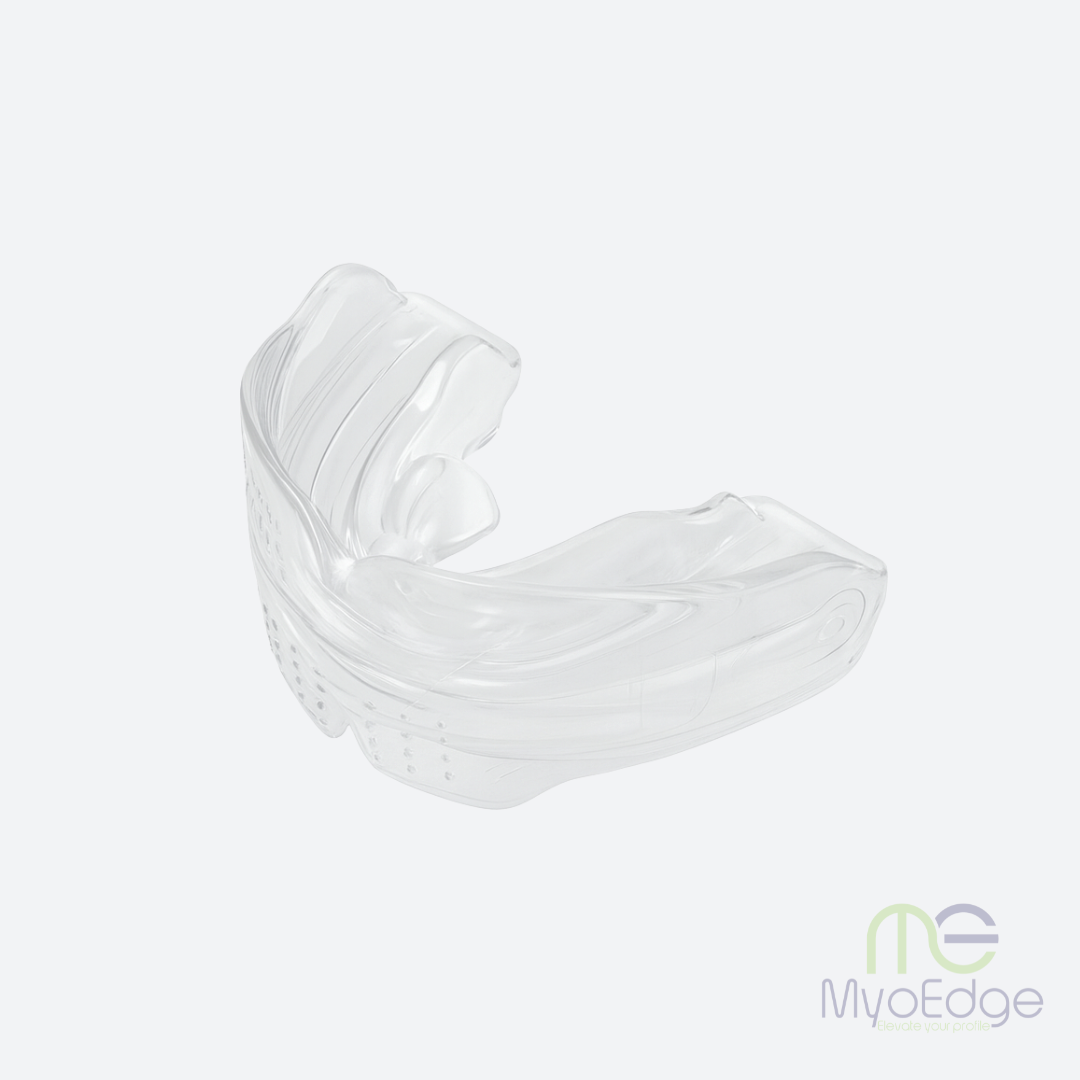
Hold the position for a few seconds, relax, and repeat it several times during the day. This should feel light, not forced. If you struggle to keep the tongue in place, the MyoEdge Tongue Positioner™ can be used for effective tongue posture neck alignment.
Mewing is best understood as a daily posture habit, not a dramatic face-changing trick. The basic position is simple: tongue up, lips closed, teeth lightly apart, and nasal breathing when possible. The goal is to notice when your tongue drops and calmly bring it back into position without clenching your jaw.
To make the technique more effective, focus on full-tongue contact instead of just pressing the tip upward. Keep your jaw relaxed, avoid pushing your teeth together, and check your posture during screen time because a forward head position can make mewing harder to maintain. Practiced gently, mewing can support better tongue posture, cleaner facial presentation, and healthier oral habits over time.
Tongue posture breathing means keeping the lips gently closed while breathing through the nose whenever possible. This matters because an open-mouth posture can make it harder to maintain proper tongue position. To practice, close your lips softly, relax your jaw, place your tongue on the roof of your mouth, and take slow, nasal breaths.
Keep the practice easy. You should not feel panic, strain, or jaw tightness. For extra support, you can use MyoEdge Lip Trainer™ for Jawline & Facial Training and the MyoEdge Breathe Tape™ for Breathing & Airflow control while you are asleep.
Neck alignment can change how clearly the lower face is displayed from the side. You have forward head posture when the head sits in front of the shoulders, often due to phones, laptops, gaming, or long hours at the desk. This position can make the chin look weaker, and the under-jaw area appear softer. Chin tucks keep the jaw relaxed and oral posture steady by supporting tongue posture neck alignment and training the head to sit properly over the shoulders.
To practice, sit or stand tall, look straight ahead, and gently slide your chin backward as if making a small “double chin.” Hold for a few seconds, then relax. This exercise may help people who want to naturally fix a recessed chin appearance by improving side-profile posture, rather than changing bone structure.
The wall alignment drill gives your body instant feedback. Stand with your back near a wall, keep your shoulders relaxed, and gently bring the back of your head closer to the wall without lifting your chin. Keep your ribs down and breathe normally.
This drill helps you notice whether your head drifts forward throughout the day. It also supports better jawline presentation because the face sits more clearly over the neck. If your shoulders tend to round forward, the MyoEdge CoreCorrect™, listed under Posture &
Alignment, can be used as an optional posture-awareness tool alongside daily movement.
A neck mobility routine helps reduce stiffness that builds up from long hours of screen use. Start with slow neck turns, gentle side bends, and relaxed shoulder rolls. Keep every movement smooth and pain-free. The goal is to restore comfort, not force your neck into a perfect position.
This is where the connection between jaw pain and posture can matter. Poor alignment may add tension around the jaw, neck, and shoulders. For additional mobility support, MyoEdge lists the MyoEdge Neck Stretcher™ as a cervical decompression stretcher. It should be used as a support tool within a broader routine, not as a quick fix for jawline concerns.
Your face does not sit on your neck alone; it sits on your entire frame. A simple reset starts with relaxing your shoulders, opening your chest, and stacking your ribs over your hips.
Keep your head level, rather than letting it drop forward.
Bad body posture can cause the chest to sink and the shoulders to round, altering how the lower face is carried. This is different from neck alignment because it involves the whole body. People searching for how to fix a weak chin naturally often focus only on the face, but the body underneath matters too.
Facial fat can hide natural jawline structure. Even when the jaw is well-shaped, excess facial fat may reduce definition around the chin and neck area. Sustainable weight management can make the lower face look sharper over time without extreme diets or risky shortcuts.
The best approach is simple and steady: move daily, eat balanced meals, stay hydrated, and avoid quick fixes that drain energy. You do not need a harsh plan to support jawline visibility. When healthy weight habits work together with better posture, the lower face often appears cleaner and more defined in a natural way.
Sleep affects facial definition more than most people realize. Poor sleep can increase puffiness, slow recovery, and make the face look tired or swollen. A weak sleep routine can also make it harder to stay consistent with tongue posture neck alignment, breathing awareness, and daily movement habits.
A study on sleep restriction and facial appearance found that people with restricted sleep were rated as less healthy, less attractive, and sleepier. A practical routine can include a regular bedtime, less late-night screen time, and sleeping in a position that does not compress the face. Better rest will not reshape the jawbone, but it may support fresher facial contours.
Improving your jawline naturally is not about forcing your face into a new shape. It is about supporting the systems that influence how your lower face looks and functions each day. Tongue posture neck alignment, sleep, weight, and overall body posture management; all play a role in how your jawline appears.
The most realistic path is consistency. Small habits repeated daily can support better oral posture, cleaner alignment, and a more confident facial profile over time.
Explore MyoEdge to find high-quality oral posture and alignment tools and support your daily jawline wellness routine.
Can tongue posture improve jawline appearance?
Yes, proper tongue posture may support oral muscle balance, nasal breathing, and facial posture. However, results are gradual and depend on consistency, age, anatomy, and overall habits.
What tongue posture exercise can I start with?
Start with the tongue suction hold. Place your tongue tip behind the upper teeth, gently lift the full tongue to the roof of the mouth, close your lips, and breathe normally if possible.
Is there a jaw pain posture connection?
Yes. Poor posture may increase tension in the jaw, neck, and shoulders. If pain is ongoing, it is best to speak with a qualified dental, medical, or airway professional.
Can I fix recessed chin naturally?
You can fix a recessed chin through posture, tongue posture, weight management, and better facial habits. However, natural methods cannot dramatically change bone structure.
What is the best way to fix a weak chin without surgery?
The best non-surgical approach is to combine tongue posture, neck alignment, full-body posture, healthy weight management, better sleep, and professional guidance when needed.